Building a business from the ground up is an immense achievement. But as many owners across Ireland eventually realize, building a company and selling a company are two entirely different disciplines.
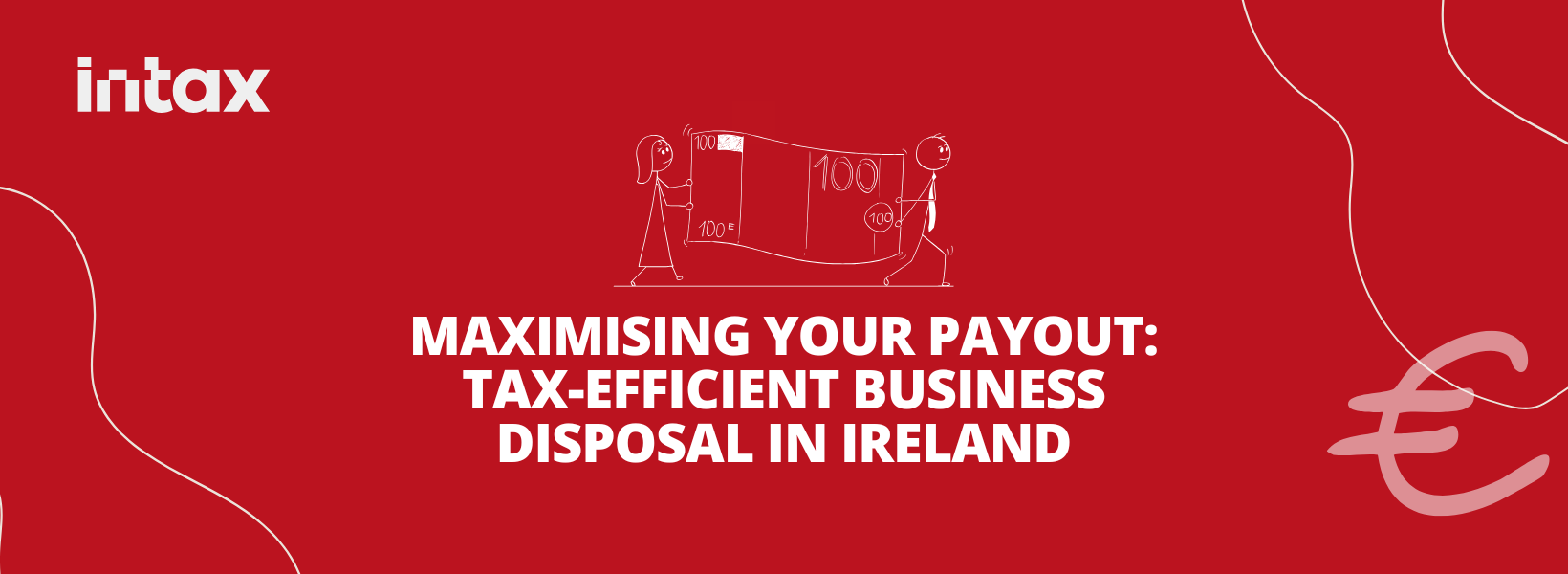
When you prepare to pass the torch, your primary hurdle isn’t finding a buyer—it’s managing the tax friction that comes with the transaction. Capital Gains Tax (CGT) in Ireland sits at a headline rate of 33%. Without a proactive, structured approach, a third of your life’s work could disappear at the point of sale.
At intax.ie, we specialize in turning complex transitions into orderly, tax-efficient success stories. If you are aiming for a successful exit over the next 12 to 36 months, here is how you should structure your business today based on current Revenue.ie statutory frameworks.
1. The Share Sale vs. Asset Sale Crossroads
One of the earliest decisions you will face is deciding exactly what you are selling. This structural choice splits buyers and sellers into two distinct camps:
- The Share Sale (Seller Preferred): You sell the entire limited company to the buyer. The legal entity remains intact, but the ownership transfers. For you, the seller, this is highly efficient because it allows you to access powerful personal CGT reliefs.
- The Asset Sale (Buyer Preferred): The buyer picks and chooses specific parts of your business (e.g., the brand name, customer lists, or machinery) while leaving the original corporate shell behind. This leaves the corporate entity intact, meaning the cash goes into the company first and is subject to Corporation Tax before you can extract it personally.
Understanding this balance early allows you to negotiate terms from a position of financial strength. For instance, if your buyer pushes for an asset deal but you prefer a share sale to preserve your liquidity, you need a firm grasp on how corporate rates interact. It helps to keep a close eye on the broader landscape; you can read our updated analysis on Ireland’s 12.5% vs. 15% Corporation Tax landscape to understand how headline structures are shifting for trading companies.
2. The Milestone: Revised Entrepreneur Relief
If you opt for a share sale, your premier objective is qualifying for Revised Entrepreneur Relief. When utilized correctly, this relief slashes your CGT rate from 33% down to just 10%.
Following legislative updates from the Finance Act, an important transition occurred on January 1, 2026. The lifetime limit on qualifying capital gains has officially increased from €1 million to €1.5 million. This means a single business owner can now shield up to €1.5 million in gains, yielding a maximum tax saving of €345,000.
To ensure your business matches the strict criteria before a buyer reviews your books, you must satisfy three key statutory baselines from the day of disposal:
- Active Engagement: You must have spent a continuous period of three out of the five years immediately preceding the sale working as a director, officer, or employee in a managerial or technical capacity, spending at least 50% of your time on the business.
- Ownership Threshold: You must own at least 5% of the ordinary shares in the trading company (or holding company of a trading group).
- The Assets: The relief only applies to “chargeable business assets”—assets used directly for the purposes of the trade.
| Revised Entrepreneur Relief (Post-Jan 1, 2026) | |
| Lifetime Cap Limit | €1,500,000 |
| Relief Tax Rate | 10% (Reduced from 33%) |
| Max Potential Tax Saving | €345,000 |
3. The “Retirement Relief” Alternative
Despite its name, you do not actually have to fully retire from the business world to claim Retirement Relief. Instead, this is an age-based CGT relief available to owners aged 55 or older who are disposing of qualifying business assets or shares in a family company.
According to Revenue.ie operational manuals, the structure of this relief depends entirely on who is acquiring the firm, and critical threshold age bands apply:
- Disposals Outside the Family: If you sell to a third-party buyer between the ages of 55 and 69, you can claim full relief from CGT if the total market value of the business assets does not exceed €750,000. Once you turn 70, that lifetime limit lowers to €500,000.
- Disposals Within the Family: If you are passing the company down to your child or a designated successor, a maximum relief threshold of €10 million applies if you are between the ages of 55 and 69. If you make the transfer at age 70 or older, the tax-free ceiling is restricted to €3 million.
Revenue Insight & Anti-Avoidance: If you claim Retirement Relief by transferring your business shares to a child, a strict 6-year clawback rule applies. If the child disposes of the shares or business assets within six years of the transfer date, the original CGT relief is revoked, and the tax liability becomes due.
4. “Corporate Grooming”: Cleaning the Balance Sheet
A major mistake business owners make is waiting until the letter of intent is signed to look at their balance sheet. Strategic structuring requires “grooming” your business at least two years before going to market.
Buyers want to purchase a lean, high-performing trading operation. They rarely want to buy your non-trading assets, such as investment properties, excess cash reserves, or corporate vehicles.
Furthermore, Revenue rules dictate that if your limited company holds too many non-trading investments or passive assets, it may lose its status as a “wholly or mainly” trading entity. If that happens, your entire share holding could be disqualified from Entrepreneur Relief.
As part of this corporate grooming process, you must ensure that your operational workflows match your transaction goals. This includes your daily tax accounting systems. If your corporate records are messy, it slows down due diligence and risks derailing the transaction entirely. You can learn more about aligning your financial systems by reading our guide to Mastering VAT in Ireland’s Digital Economy, which breaks down how to protect your cash flow using clean digital records.
The Intax Verdict: Preparation Equals Security
Selling a business is a highly emotional milestone, but your financial structure must remain completely objective.
Whether you are navigating the €1.5 million Entrepreneur Relief limit or exploring a succession transition within the family, the rules heavily favor those who plan early. The Irish economic and digital landscape moves rapidly, and the compliance requirements for corporate transformations are tighter than ever.
Planning an exit in the next 12 to 36 months?
Don’t leave your lifetime of hard work to generic formulas or last-minute scrambles. Contact the Intax.ie team today to begin structuring your corporate exit strategy with clarity and precision.